

Description
Catalogues Printing for Professional Product and Brand Presentation
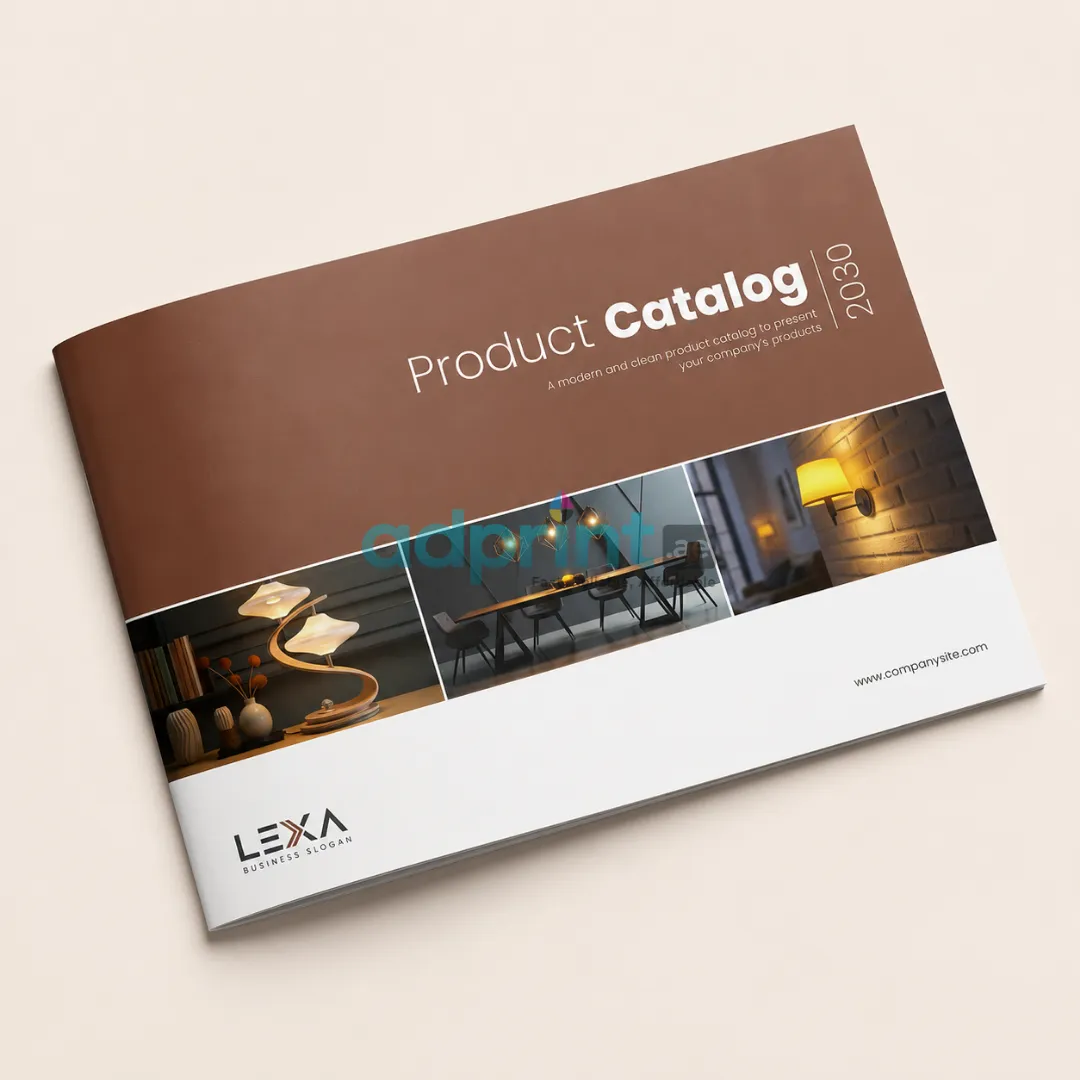
Present your products, services and business information in a clear, organised format with custom Catalogues printed around your brand, audience and sales goals. Whether you need a product range overview, a corporate publication, a retail price guide or a sales document for client meetings, professionally produced Catalogues help bring information, photography and specifications together in one practical piece. Ad Print Advertising through Ad Print Advertising LLC, can help you plan a print configuration based on your content, page count, paper preference, binding and required quantity.
Effective Catalogues do more than list products. They establish a visual structure, help readers compare options and make it easier to find the information they need. Consistent typography, clear product photography, logical sections and accurate descriptions create a more useful experience for customers and sales teams. From a compact handout to a detailed multi-page publication, the right catalogue format depends on how much information you need to communicate and how recipients will use it.
Key Features and Benefits
- Custom page layouts: Organise products, services, categories, specifications, prices and company details around your content.
- Multiple size options: Consider common formats such as A4, A5, A6 or landscape layouts, subject to the selected production configuration.
- Cover and inner-page choices: Select suitable paper stocks for the cover and internal pages according to your design and budget.
- Binding options: Depending on page count and production availability, options may include saddle stitching, perfect binding, wire binding or comb binding.
- Colour reproduction: Use product images, brand colours, diagrams and illustrations to support your message.
- Flexible quantities: Plan a run for sales meetings, retail distribution, exhibitions, showrooms or wider campaigns.
- Brand consistency: Carry your logo, colour palette, typography and visual style through the publication.
- Practical reference: Printed catalogues give sales teams and customers a tangible resource to review away from a screen.
Applications for Catalogues
Custom Catalogues can support a wide range of business communication needs. Retailers can organise product categories, feature new arrivals and present product details in a convenient printed format. Manufacturers and distributors can use a catalogue to group product lines, technical information, model references and ordering details. Service companies can create a structured overview of their solutions, packages, case studies and contact information.
Businesses also use Catalogues for trade shows, exhibitions, sales presentations, dealer networks, showroom displays, procurement meetings and customer visits. A printed publication can complement a website by giving prospects a curated overview of the most relevant information. If prices or specifications change frequently, consider whether a replaceable insert or a QR code linking to current online information would make the printed document more useful.
Choose the Right Size, Page Count and Binding
Before preparing Catalogues, decide how readers will handle and use the publication. A4 can provide room for product photography, descriptions and technical tables. A5 is easier to carry and can work well for compact product selections or sales handouts. Smaller formats may suit short reference guides, while landscape layouts can support wide product images, charts or design-led presentations. Actual available sizes should be confirmed for your selected binding and page count.
- Page count: Plan enough space for an introduction, category dividers, product content, supporting information and contact details without overcrowding the layout.
- Cover stock: A heavier cover can provide a more substantial feel and help distinguish the cover from inner pages.
- Inner-page stock: Choose a paper weight that balances readability, image quality, page flexibility and total thickness.
- Saddle stitching: Often suited to shorter publications, subject to page-count and production requirements.
- Perfect binding: Can provide a book-like spine for suitable multi-page publications.
- Wire or comb binding: May be useful for reference material that needs to open flat, depending on the selected product and production setup.
Binding suitability depends on the final page count, paper thickness and finished dimensions. Ask for a recommendation before locking the design, because a chosen binding method can affect the page layout, spine allowance, margins and overall production cost. Confirm the finished size, cover and inner stock, colour specification, print sides, binding and quantity in the quotation.
Designing Catalogues That Help Customers Find Information
Start with a clear contents structure. Group products into logical categories, use consistent headings and keep specifications in a repeatable format. Each product entry should include the information buyers need, such as a product name, key features, dimensions or model reference where applicable, and a contact or ordering route. Use comparison tables only when they improve understanding and ensure that labels, units and figures are consistent throughout the document.
High-quality images can improve the presentation, but they should remain accurate to the products being sold. Use consistent image backgrounds and cropping where possible, and avoid stretching product photography. Ensure that captions and specifications match the current offering. For digital access, a QR code can direct readers to product pages, downloadable manuals, an updated price list or a request form. Test the destination before printing and keep enough quiet space around the code for reliable scanning.
Artwork Preparation and Proof Approval
Prepare artwork using the final page dimensions and the printer’s supplied template. Include the required bleed, keep important text inside safe margins and check page order, pagination, contents references and any fold or binding allowances. Use high-resolution images at their intended print size and export a print-ready PDF according to the production requirements. Fonts should be embedded or outlined as requested, and image links should be checked before the file is submitted.
Review the full proof before approving Catalogues for production. Check product names, descriptions, prices, contact information, website addresses, QR codes, page numbers, image placement and any technical tables. Confirm that the cover artwork, spine where applicable, inside pages and back cover are in the correct sequence. For general print-file preparation guidance, see Adobe’s document setup and printing guide. Final production should begin only after the artwork and specifications have been checked and approved.
Why Choose Ad Print Advertising?
Ad Print Advertising supports businesses that need printed material to present products and services professionally. Through Ad Print Advertising LLC, you can discuss Catalogues based on your intended use, content volume, audience, distribution plan and budget. Establishing the specification early helps align the design and production choices before the publication is sent to print.
- Content-led planning: Structure the publication around product categories, customer questions and the information your sales team needs to communicate.
- Specification review: Confirm page count, finished size, cover and inner paper, print sides, binding and quantity.
- Consistent presentation: Use a coherent visual style across product pages, category dividers, cover artwork and contact details.
- Proofing workflow: Review the final document for content accuracy, page order and artwork issues before production.
- Related print solutions: Coordinate catalogues with brochures, business cards and other materials used in sales and marketing.
To request a quotation, share the approximate page count, finished size, required quantity, paper preferences, binding choice, colour requirements and deadline. If your content is not yet print-ready, explain whether you need help with layout or artwork preparation. Clear requirements make it easier to compare configurations and avoid unnecessary changes after approval.
Industries We Serve
Retail and e-commerce: Product ranges, seasonal collections, gift selections and store information.
Manufacturing and distribution: Product specifications, model ranges, technical details and dealer resources.
Real estate and interiors: Property portfolios, material selections, furniture ranges and project showcases.
Hospitality and food service: Product portfolios, catering packages, venue services and promotional collections.
Corporate and professional services: Service overviews, capability statements, solution summaries and client presentation documents.
Exhibitions and events: Show guides, product handouts, sponsor information and materials for sales teams or visitors.
Each industry has different content priorities. Technical publications may require consistent tables and detailed product references, while lifestyle or retail catalogues may rely more heavily on photography and visual grouping. In both cases, Catalogues should make information easy to scan and should not rely on decorative elements at the expense of accuracy or legibility.
Paper Sourcing and Printing Standards
When selecting materials for printed catalogues, consider responsible paper sourcing, print quality, durability and the way the publication will be handled. The Forest Stewardship Council guidance for paper and print provides information about responsible sourcing for paper-based products. You can also review the relevant ISO standard to understand its scope and potential applicability to your printing requirements. These resources can support informed material selection and supplier discussions; they do not automatically certify a specific printed product, material or printing company.
Relevant Products
Build a coordinated set of sales and marketing materials with related products from Ad Print. Explore the Business Printing category for other printed communication materials, or browse Standard Business Cards for networking and sales meetings. For broader guidance on business card choices, read the Business Card Printing in UAE guide and the article on different business card styles.
Order Custom Catalogues
Ready to print Catalogues for your business? Share the required quantity, page count, finished size, cover and inner-page paper preferences, binding, print sides, artwork status and delivery deadline. Ad Print Advertising LLC can use these details to help define the required print specification and quotation. Review the proof and confirm the final details before production. Professionally planned Catalogues can give customers and sales teams a practical reference while presenting your products and services in a consistent, organised way.